
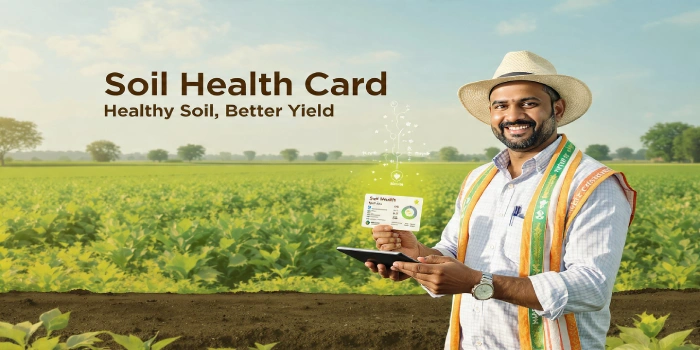
Soil is the foundation of agriculture — it feeds crops, which in turn feed people. Yet, over time, excessive use of fertilizers and improper soil management have degraded its quality. To address this issue, the Government of India launched the Soil Health Card initiative to help farmers understand their soil better and make informed decisions for improving productivity and sustainability.
What Is a Soil Health Card?
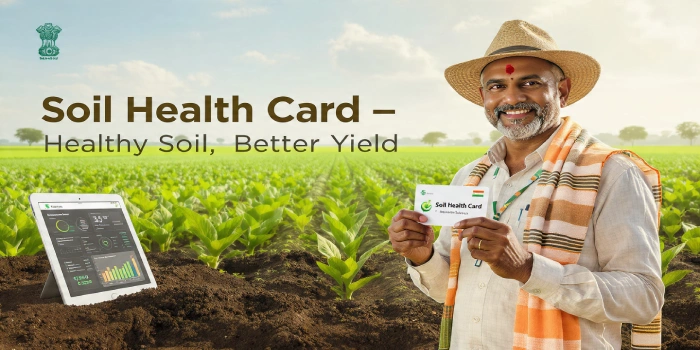
A Soil Health Card is a government-issued report that provides detailed information about the nutrient status and health of a farmer’s soil. It includes essential data such as nitrogen (N), phosphorus (P), potassium (K), micronutrients, organic carbon content, and soil pH levels.
By analyzing these parameters, farmers can determine what type and quantity of fertilizer their land actually requires — preventing both overuse and underuse of chemicals.
Objectives of the Soil Health Card
The primary aim of the Health Card initiative is to promote balanced use of fertilizers and sustainable farming practices. Its objectives include:
- Assessing the fertility status of soil across different regions.
- Promoting judicious use of fertilizers and organic manure.
- Enhancing crop productivity and profitability.
- Reducing the cost of cultivation through informed decisions.
- Encouraging farmers to adopt scientific soil management practices.
Understanding the Soil Health Card Scheme
The Health Card Scheme was launched in 2015 by the Ministry of Agriculture & Farmers Welfare. It was designed to issue health cards to every farmer in the country once every two years.
Under this soil health scheme, soil samples are collected from farms, tested in accredited laboratories, and results are uploaded on a centralized online portal. Based on the test findings, personalized recommendations are provided to each farmer regarding nutrient management and soil amendments.
This large-scale initiative has helped millions of farmers identify nutrient deficiencies and adopt corrective measures to enhance soil fertility and yield.
How Does the Soil Health Card Work?
The process of generating a soil’s Health Card involves several steps:
- Soil Sample Collection: Samples are collected from various depths of farmland using scientific methods.
- Laboratory Testing: Samples are analyzed in labs to determine nutrient composition and physical characteristics.
- Data Compilation: Results are compiled and uploaded to the digital database.
- Card Generation: Farmers receive a printed or digital health card summarizing their soil’s condition.
- Recommendations: The card includes advice on crop-wise nutrient management, fertilizer dosage, and soil amendments.
Benefits of the Soil Health Card
The soil’s Health Card provides several direct and indirect benefits for farmers and the environment:
- Improved Fertilizer Use Efficiency: Farmers apply fertilizers based on real soil needs, preventing waste and saving costs.
- Increased Crop Yield: Balanced nutrient management enhances soil fertility and boosts productivity.
- Environmental Protection: Reduced use of chemical fertilizers lowers pollution and groundwater contamination.
- Long-Term Soil Health: Encourages organic farming and sustainable soil management.
- Economic Savings: Lower input costs lead to higher profits for farmers.
Through the soil’s Health Card scheme, India has moved closer to achieving a balance between productivity and sustainability.
Digital Access: Soil Health Card Login
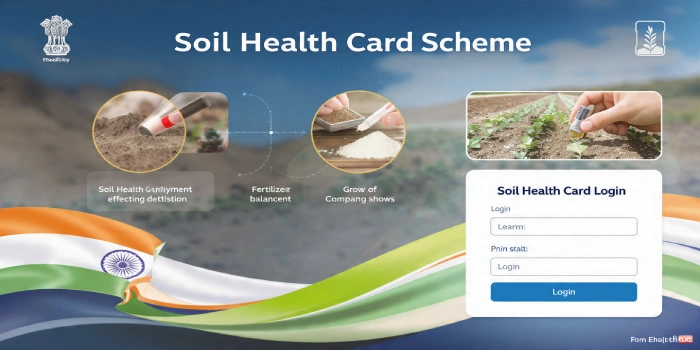
The government has made it easier for farmers to access their reports online through the Soil Health Card Login portal. By visiting soilhealth.dac.gov.in, farmers can:
- Log in using their registered credentials.
- View or download their soil test results.
- Track the status of their sample analysis.
- Get region-specific fertilizer recommendations.
This health card login system promotes transparency, accessibility, and efficiency in delivering information to farmers, even in remote areas.
Impact of the Soil Health Card Scheme
Since its launch, the soil’s Health Card Scheme has had a significant impact on Indian agriculture:
- More than 22 crore health cards have been issued.
- Fertilizer consumption patterns have improved, with a shift toward balanced usage.
- Average crop productivity has shown measurable increases in various states.
- Farmers have reported better awareness about organic manure and crop rotation.
The scheme has not only educated farmers about soil nutrition but has also strengthened India’s commitment to sustainable farming.
Challenges and the Way Forward
While the program has been widely successful, it faces challenges such as:
- Delays in sample testing due to limited lab capacity.
- Lack of awareness among small and marginal farmers.
- Need for timely dissemination of results and recommendations.
To overcome these issues, more mobile soil testing laboratories and digital awareness programs are being introduced. With continuous technological upgrades, the Soil Health Card initiative can play a key role in India’s agricultural transformation.
FAQs
What is a Soil Health Card?
A soil’s Health Card is a government-issued report that provides information on the nutrient status and fertility of a farmer’s soil.
How often is the Soil Health Card issued?
The card is issued once every two years under the soil’s Health Card Scheme.
What information does the Soil Health Card contain?
It includes data on major nutrients like N, P, K, micronutrients, soil pH, and organic carbon levels, along with fertilizer recommendations.
How can farmers access their Soil Health Card online?
Farmers can log in through the Soil Health Card Login portal at soilhealth.dac.gov.in to download their reports.
What are the main benefits of the Soil Health Card?
It promotes balanced fertilizer use, reduces costs, improves productivity, and supports sustainable soil management.