
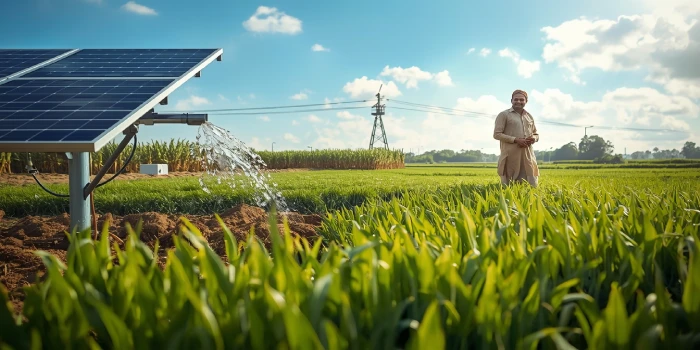
India is a country where farming is not just an occupation but a way of life. Millions of families depend on agriculture for their income and daily needs. But farmers often face many challenges like rising electricity bills, expensive diesel for irrigation pumps, and uncertain power supply. To reduce these problems and promote clean energy, the government introduced the PM Kusum Yojana.
PM Kusum Yojana is a solar energy scheme specially designed for farmers. Its main aim is to help farmers use solar power for irrigation and at the same time reduce their dependency on traditional electricity and diesel. In this article, we will understand what PM Kusum Yojana is, how it works, its benefits, and how PM Kusum Yojana MP is helping farmers in Madhya Pradesh.
What is PM Kusum Yojana?
PM Kusum Yojana stands for Pradhan Mantri Kisan Urja Suraksha evam Utthan Mahabhiyan. The name may sound long and technical, but the idea behind it is very simple. The scheme focuses on providing solar-powered pumps and setting up small solar plants in rural areas.
Through PM Kusum Yojana, farmers can install solar pumps for irrigation. They can also set up solar panels on their land to generate electricity. The electricity produced can be used for farming activities, and the extra power can be sold to the electricity distribution companies. This means farmers can not only save money but also earn additional income.
The scheme supports the use of renewable energy, which is good for the environment and helps reduce pollution. It is a win-win situation for farmers and for the country.
Main Objectives of PM Kusum Yojana
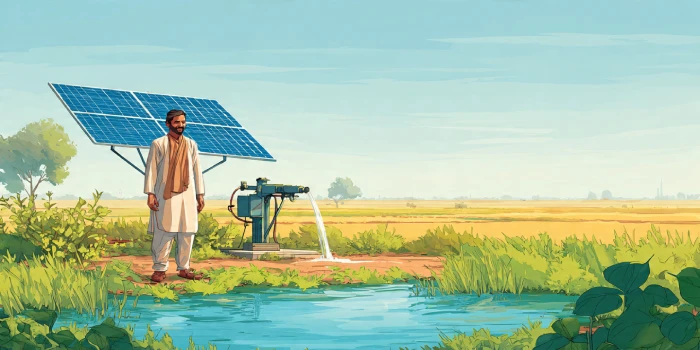
The main goal of PM Kusum Yojana is to increase the use of solar energy in agriculture. The government wants to reduce the use of diesel pumps, which are costly and harmful to the environment. Many farmers in villages still depend on diesel pumps because regular electricity supply is not available all the time.
Another important objective is to provide reliable power to farmers. With solar pumps, farmers do not have to wait for electricity supply at odd hours. They can use solar energy during the daytime for irrigation.
The scheme also aims to increase farmers’ income. By selling surplus electricity generated from solar plants, farmers can get an extra source of revenue. This extra income can support their family and improve their living standards.
How PM Kusum Yojana Works?
PM Kusum Yojana has different components, but the basic idea is easy to understand. Farmers can apply to install solar pumps for their fields. The cost of installing a solar pump is shared between the central government, the state government, and the farmer. https://pmkusum.mnre.gov.in/
In most cases, farmers only need to pay a small portion of the total cost. The rest is covered by government subsidies. This makes it affordable for small and marginal farmers as well.
There is also an option to install small solar power plants on barren or unused land. The electricity generated is connected to the grid, and farmers can sell it to power distribution companies. This creates a steady income without much daily effort.
In this way, PM Kusum Yojana supports both energy production and agricultural needs.
Benefits of PM Kusum Yojana for Farmers
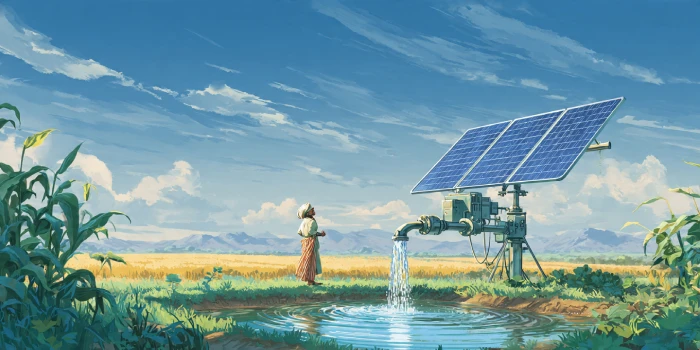
One of the biggest benefits of PM Kusum Yojana is the reduction in irrigation costs. Diesel is expensive, and electricity bills can also be high. With solar pumps, farmers can use sunlight, which is free and available in abundance in India.
Another benefit is independence from irregular power supply. Many farmers complain that electricity is available only at night or for limited hours. Solar pumps allow them to irrigate their fields during the day according to their convenience.
There is also environmental benefit. Solar energy does not produce smoke or pollution. By shifting to solar pumps, farmers help reduce carbon emissions and protect the environment for future generations.
The additional income from selling surplus electricity is another major advantage. It gives financial security and reduces the risk during crop failure or low market prices.
PM Kusum Yojana MP: A Strong Step in Madhya Pradesh
When we talk about PM Kusum Yojana MP, it becomes clear how important this scheme is for states like Madhya Pradesh. Madhya Pradesh is largely an agricultural state. Many farmers depend on irrigation for crops like wheat, soybean, and pulses.
Under PM Kusum Yojana MP, thousands of farmers have applied for solar pumps. The state government has actively promoted the scheme and encouraged farmers to shift from diesel pumps to solar-based systems.
In rural areas of Madhya Pradesh, power supply can sometimes be irregular. Solar pumps under PM Kusum Yojana MP have helped farmers get reliable access to water for their crops. This has improved crop productivity and reduced stress related to electricity cuts.
PM Kusum Yojana MP has also created awareness about renewable energy. Farmers who were earlier unsure about solar technology are now more confident after seeing successful installations in nearby villages.
Financial Support and Subsidy Structure
A key reason behind the success of PM Kusum Yojana is its subsidy structure. The government understands that farmers cannot afford high initial investment. Therefore, a major part of the cost is covered by subsidies.
Typically, the central and state governments together provide a large percentage of the cost. Farmers contribute only a small share, and sometimes loans are also available to support their contribution.
This financial support makes PM Kusum Yojana and PM Kusum Yojana MP accessible to small farmers who have limited savings. It reduces the financial burden and encourages more participation.
Real Impact on Rural Life
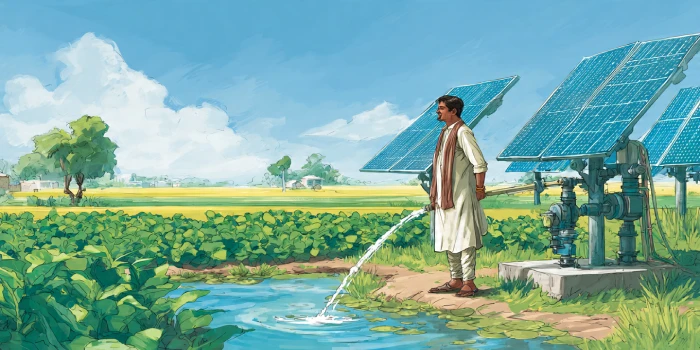
The real impact of PM Kusum Yojana can be seen in daily rural life. Farmers no longer need to stand in long queues to buy diesel. They do not have to worry about rising fuel prices. Solar pumps once installed require low maintenance and can work for many years.
In places where PM Kusum Yojana MP has been implemented effectively, farmers have shared positive experiences. They say that their irrigation has become smoother and more predictable. This helps in better crop planning.
Some farmers have even started using the extra income from selling power for their children’s education or improving their homes. This shows that PM Kusum Yojana is not just about energy but about overall rural development.
Challenges and Future Scope
Like any big scheme, PM Kusum Yojana also faces some challenges. Sometimes there are delays in installation or paperwork. Some farmers may not be fully aware of the process to apply.
However, with increasing awareness and better coordination between departments, these challenges can be reduced. Digital platforms and local awareness camps can make the application process easier.
The future scope of PM Kusum Yojana and PM Kusum Yojana MP is very promising. As more farmers adopt solar technology, the overall use of renewable energy in the country will increase. This will reduce pressure on traditional power plants and support sustainable development.
Conclusion
PM Kusum Yojana is a simple yet powerful step towards empowering farmers and promoting clean energy. It reduces irrigation costs, provides reliable power, and creates an extra source of income. For states like Madhya Pradesh, PM Kusum Yojana MP has become an important tool for agricultural and rural development.
By combining solar energy with farming, the scheme supports both economic growth and environmental protection. If implemented effectively and with proper awareness, PM Kusum Yojana can transform rural India and make farmers more self-reliant in the coming years.